



Scenario 1: Automotive Parts Welding Line Upgrade
Background
An automotive parts manufacturer relied on multiple manual welding stations. Key issues included inconsistent weld quality, high rework rates, welding fumes affecting worker health, difficulty hiring skilled welders, and rising labor costs.
Solution
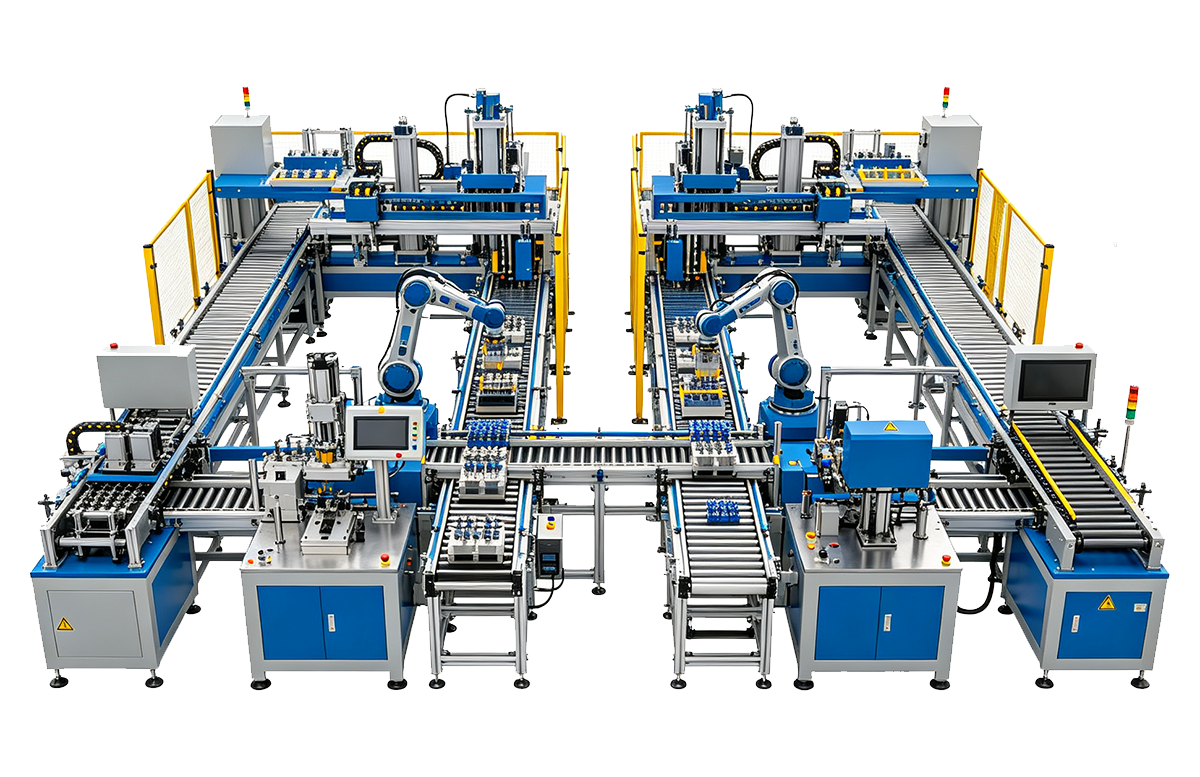
- Deployed robot welding workstations with laser positioning and seam tracking to automatically correct torch paths
- Added automatic loading/unloading so operators only place parts at the feed position while robots handle clamping, welding, and unloading
- Linked welding stations with fume extraction that starts automatically when welding begins
- Uploaded key welding parameters to a production visualization system for full seam traceability
Results
- Shorter welding cycle times and higher output per shift
- Improved weld consistency and lower rework rates
- Reduced reliance on specialist welders with more flexible staffing
- Traceable welding quality data meeting OEM audit requirements